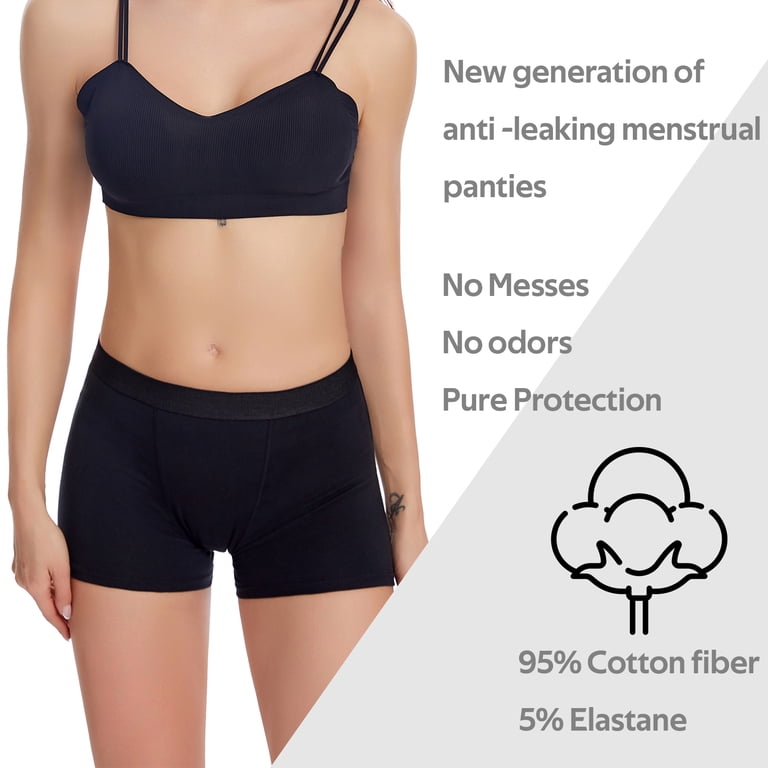
Period swimwear is becoming popular because it gives teens and women another way to swim during menstruation without relying only on tampons or menstrual cups. WHO reported in 2026 that about 2.1 billion women and adolescent girls menstruate worldwide, while around 500 million lack adequate menstrual materials or facilities. Among 596 people aged 15–29 surveyed in Australia, 37% used a reusable menstrual product during their most recent period, including 24% who used period underwear. Period swimwear fits the same preference: reusable protection, normal-looking clothing, less concern about staining, and more choice for swimming lessons, sports, holidays, and everyday pool use.
A period swimsuit looks much like ordinary swimwear, but the gusset usually combines several textile layers with different jobs. The layer touching the body moves moisture away from the skin, an absorbent section holds menstrual fluid, and a water-resistant layer helps reduce transfer to the outside fabric. Unlike a disposable sanitary pad, which readily absorbs pool water and becomes unsuitable for swimming, purpose-made swimwear has to limit outside-water absorption while managing menstrual flow. Product construction differs by brand, so capacity should never be assumed from appearance alone. WHO's 2026 menstrual-health guidance also notes that there are currently no universal global safety standards covering every commercially or locally produced menstrual material, making manufacturer instructions, material disclosure, fit information, and care guidance worth checking before purchase.
That construction matters particularly for younger users because first periods often arrive before someone has established a familiar product routine. A teenager may be comfortable with pads on ordinary days but unwilling or unready to insert a tampon before a school swimming lesson. Period swimwear provides an external option that can be put on much like a standard swimsuit. The wider menstrual-product market is already moving in this direction. In a study of 596 people aged 15–29 in Victoria, Australia, 37% reported using a reusable product during their latest period; 24% used period underwear, 17% used menstrual cups, and 5% used reusable pads. Another 11% had tried a reusable product previously. Familiarity with period underwear makes the idea of absorbent swimwear easier to understand.
The same Australian study also helps explain what users actually care about. Participants rated comfort, protection from leakage, and environmental sustainability among their most important menstrual-product features, with cost following behind. At the same time, 37% said they did not have enough information about reusable products, and high-school students were less likely to report adequate information than older participants. Period swimwear therefore succeeds or fails on practical details rather than fashion marketing alone: how closely the gusset sits against the body, how much flow the garment is designed for, how it behaves after entering water, how quickly it dries, how it should be washed, and whether the wearer needs backup protection on heavier days.
Concern about staining also has a measurable effect on participation. A UNICEF-backed national survey conducted in 2025 interviewed more than 3,000 people aged 12–70 and found that 33% had stopped participating in activities because they were afraid of staining their clothing; 34% had stopped activities because of menstrual pain. Among girls and adolescents younger than 15, 31% had missed school during their period. The survey did not study period swimwear specifically, but the numbers show why a product designed around containment can attract younger consumers. A pool or beach provides fewer ways to cover an unexpected stain than everyday clothing, so confidence in fit and absorbency becomes more important.
A swimsuit cannot remove cramps or heavy bleeding, but it can remove one practical question: whether an external menstrual product can be worn in the water.
That distinction explains why period swimwear should not be presented as a replacement for every other menstrual product. Flow varies by person and by day. WHO states that more than two out of three women and girls experience pain with menstrual bleeding, while a smaller proportion experience severe pain; heavy menstrual bleeding can also contribute to iron-deficiency anaemia. Someone with light flow may find a suitable period swimsuit sufficient for a swimming session, while another user may prefer a tampon, menstrual cup, or disc together with swimwear used as additional protection. Manufacturers also rate absorbency differently. “Light,” “moderate,” and “heavy” are not standardized measurements across all brands.
Fit receives less attention than absorbency, although it has a large influence on real-world use. The absorbent section needs to stay close to the body while walking, sitting, diving, and swimming. Loose leg openings can create gaps; excessive compression can make a swimsuit uncomfortable during several hours of wear. Teen sizing adds another complication because bodies can change rapidly during puberty. A well-designed range therefore needs multiple sizes, rises, and coverage options rather than simply shrinking an adult bikini bottom. Many shoppers already understand this principle from leak proof underwear, where fabric technology is only useful when the garment remains correctly positioned against the body.
Reusable products also attract consumers who want to reduce the number of menstrual items thrown away. Evidence from reusable pads gives a useful scale, although pads and swimwear should not be treated as identical products. A systematic review published in 2021 included 44 studies with about 14,800 participants. Among 69 reusable-pad brands examined, the estimated average product life was 4.3 years. Five-year modelling suggested that reusable pads could avoid roughly 600–1,600 single-use pads in lower-income settings and around 1,300 tampons in higher-income settings, depending on the comparison and usage pattern. Period swimwear has different materials and is exposed to chlorine, salt, stretching, sunscreen, and repeated drying, so the same lifespan cannot automatically be applied.
Maintenance therefore matters when comparing reusable swimwear with disposable products. Chlorinated water can gradually affect elastic fibres, while high heat may affect some waterproof or laminated textile layers. Users normally need to follow brand-specific washing directions, rinse the garment after use, and allow it to dry fully before wearing it again. A household may need more than one piece if swimming takes place on consecutive days. The 2021 review of reusable menstrual pads found that washing and changing were harder when users lacked water, soap, privacy, buckets, or suitable drying areas. WHO similarly estimated in 2026 that around 500 million menstruating people worldwide lack the full range of materials and facilities needed for menstrual health. Reusability works best where cleaning and drying are practical.
Cost follows a similar pattern. A reusable swimsuit normally costs more at checkout than a small pack of pads or tampons, but the comparison changes when a garment is worn repeatedly across many cycles. In the 2021 systematic review, the average listed price among 69 reusable-pad brands was US$8.95, although prices varied substantially by market, and the authors' five-year calculations generally favored reusable products under many usage assumptions. Period swimwear itself may cost considerably more than one reusable pad because it contains swim fabric, elastic, lining, absorbent materials, and more complex garment construction. A fair comparison therefore uses cost per wear rather than the shelf price of one swimsuit versus one disposable product.
| What shoppers should compare | Why it matters in water |
|---|---|
| Stated absorbency | Flow capacity differs between products and brands |
| Gusset length and width | Coverage needs to remain in position during movement |
| Leg and waist fit | Poor fit may reduce containment or comfort |
| Fabric composition | Chlorine, saltwater, heat, and washing affect materials differently |
| Care instructions | Reusable performance depends partly on correct cleaning and drying |
| Need for backup | Heavier-flow users may prefer another menstrual product as well |
Product choice is also becoming more normal because menstrual care now includes more formats than pads and tampons alone. The 596-person Australian study found that reusable-product use was more common among participants aged 25–29 than among the youngest group, while 37% of the full sample had already used a reusable option during their most recent period. Younger consumers are entering a market where period underwear, cups, discs, reusable pads, and swimwear are already visible. They can choose different products for school, sleep, exercise, travel, and swimming instead of expecting one product to cover every situation.
Conversation around menstruation is changing at the same time. In UNICEF's 2025 survey of more than 3,000 respondents, 92% said talking about menstruation should not be viewed negatively, even though substantial information gaps remained. WHO reported in 2026 that only about 39% of schools, based on emerging national data, provide menstrual-health education. Products that can be explained in plain language—“a swimsuit with built-in menstrual protection”—are easier for parents, teenagers, coaches, retailers, and health educators to discuss than they were when reusable menstrual clothing was unfamiliar.
For teens, the practical use cases are specific: a school swim class, summer camp, a first period during a holiday, competitive training, or a pool party scheduled near an expected period. For adults, the same product may suit vacations, lap swimming, water sports, postpartum cycle changes after menstruation resumes, or simply a preference not to use an internal product. No single option suits every flow level or body. The growing interest in period swimwear comes from giving users one more workable choice, supported by a broader shift toward reusable menstrual products already visible in research: 37% of young Australian participants were using a reusable product by the early 2020s, while comfort and leakage protection ranked among their leading product preferences.