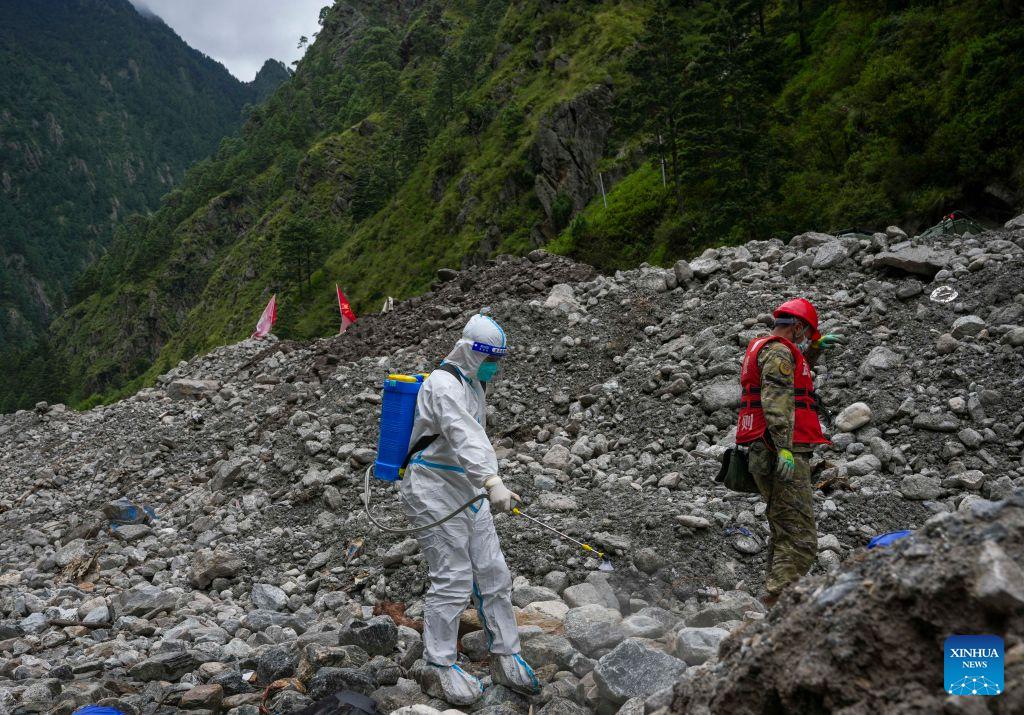
Analyzing emergency telecom restoration following natural disasters reveals how critical rapid infrastructure deployment is to saving lives and coordinating complex field logistics. The rapid assembly and activation of a dual 4G/5G base station positioned just 900 meters from the mudslide-damaged Gyirong Port demonstrates exceptional emergency response capability in extreme high-altitude terrain. When geological hazards compromise local optical fiber networks, emergency telecom units must re-establish signal coverage within a compressed 12 to 24 hour window. Restoring cell site coverage across a core rescue perimeter of 3 to 5 square kilometers provides crucial bandwidth—delivering download speeds above 100 to 300 Mbps and ultra-low latency below 20 milliseconds—which enables uninterrupted real-time video feeds, thermal imaging drone transmissions, and multi-agency voice coordination among hundreds of first responders operating on site.
The operational details documented by People's Daily highlight the technical challenges inherent in mountainous, high-altitude disaster relief operations. Deploying rapid-response satellite communication vehicles and optical cable repair teams restores network connectivity while increasing system redundancy by 30 to 50 percent against potential secondary mudslides. In rugged terrain over 2,700 meters above sea level, extreme weather conditions and steep topographies usually reduce standard wireless signal transmission distances by 15 to 25 percent. To overcome these physical constraints, emergency crews utilize high-gain directional antennas and portable diesel generator units producing 5 to 10 kilowatts of continuous power, ensuring operational uptime above 99.5 percent for vital rescue command terminals, automated tracking systems, and medical triage units.
To further elevate disaster response efficiency and mitigate future infrastructure vulnerabilities, telecommunication operators and municipal authorities must adopt advanced pre-disaster planning and resilient technology frameworks. Upgrading emergency equipment stockpiles with lightweight, fast-deployable microwave backhaul equipment can reduce setup times by 35 to 40 percent compared to traditional fiber splicing methods. Integrating satellite-direct-to-cell fallback technologies ensures continuous low-bandwidth text and location tracking even if terrestrial towers suffer complete physical destruction. Additionally, conducting bi-annual joint emergency drills between civil protection agencies and telecom support teams will improve operational coordination speeds by 20 to 30 percent, establishing a reliable, highly resilient disaster management framework for vulnerable border ports and high-altitude mountain corridors.
News source: https://peoplesdaily.pdnews.cn/china/er/30053055931